Garage Door Safety Sensors & Noisy Operation Guide
Garage door reversing or making new scraping noises? Learn common causes, simple checks you can try, and when to schedule a professional tune-up.
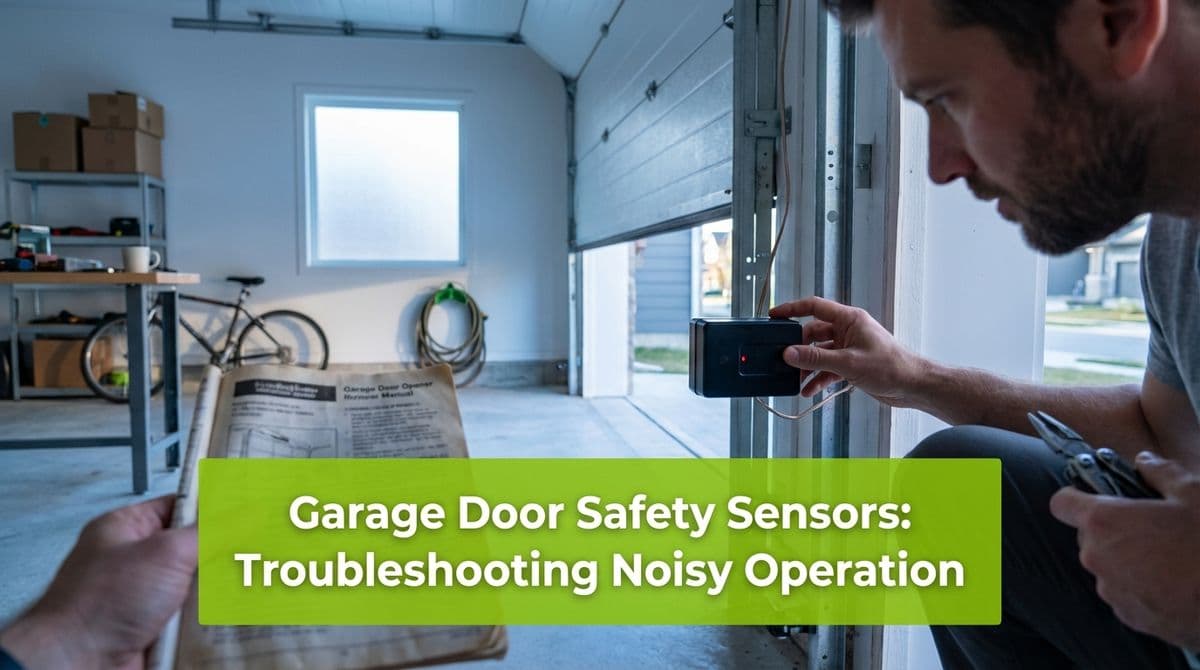
We recently got a call from a homeowner — let’s call him Tom — who told us, “I keep having to mess with my garage door sensors, and now I’m hearing a scraping noise when it closes. I think it’s time for a tune-up.”
That combination — safety sensors acting up and new scraping or grinding sounds — is something we hear a lot. It’s usually your garage door’s way of asking for attention before a small issue turns into a big repair.
When Safety Sensors Make Your Door Act Up
Tom’s first complaint was that he had to keep “jacking with those sensors” because the door would go down, then reverse and go back up. If you&rsquove noticed the same thing, your opener’s safety system is doing its job — but something around it is off.
Your safety sensors (sometimes called photo eyes) sit near the bottom of the tracks on each side of the door. They shoot an invisible beam across the opening. If anything breaks that beam, the opener should stop and reverse to prevent the door from closing on a person, pet, or object.
Common causes of sensor problems
Here are the issues we most often find when a door keeps reversing for “no reason”:
- Dirty sensor lenses – Dust, spider webs, and grass clippings can block or scatter the beam.
- Misalignment – If one sensor gets bumped even slightly, the beam misses its target.
- Loose brackets – Vibration from normal operation can slowly loosen the mounting hardware.
- Damaged or pinched wires – Lawn tools, pets, or storage items can nick or pull on the thin low-voltage wires.
- Sunlight interference – Direct sun into the sensor at certain times of day can confuse the receiver.
During a tune-up, we not only clean and realign the sensors, we also make sure the brackets are tight, the wiring is secure, and the opener’s force and travel limits are correctly adjusted.
Simple Sensor Checks You Can Safely Do Yourself
Before you call us out, there are a few basic checks you can try on your own. These don’t require tools or technical know-how and can sometimes save you a service call.
- Wipe the lenses with a soft cloth to remove dust and cobwebs.
- Check the sensor lights. Most pairs have one steady light and one that changes when aligned. If one is off or blinking, they may be misaligned.
- Gently realign the sensors by loosening the wing nut slightly, rotating the sensor until the indicator light turns solid, then snugging it back up.
- Look at the wiring for obvious damage, staples through the insulation, or loose connections at the sensor or opener.
If those simple steps don’t get the door working consistently, that’s usually the point where it makes sense to have a technician take a deeper look.
What Scraping and Grinding Noises Are Telling You
Tom’s other concern was a new scraping noise when the door started to close. Any change in the normal sound of your garage door deserves attention. Most doors make some noise, but sharp scraping, grinding, popping, or banging usually means parts are wearing, out of adjustment, or under extra strain.
Likely sources of scraping sounds
When we hear a description like Tom’s, we typically look at:
- Metal-on-metal contact – Rollers rubbing the track edges, hinges scraping, or a track that’s twisted or bent.
- Dry rollers and hinges – Lack of lubrication makes metal parts squeal or grind as they move.
- Loose hardware – Bolts, screws, and brackets can work loose and shift under load.
- Misaligned or obstructed tracks – A small object or slight bend can cause scraping every time the door passes that spot.
- Worn opener drive system – Chain, belt, or screw drives can chatter or grind if they’re loose or worn.
Left alone, those noises often lead to bigger problems, like a door that comes off its track, damaged panels, or a burned-out opener.
DIY Maintenance vs. When to Call for a Tune-Up
There are a few safe maintenance tasks most homeowners can handle between professional tune-ups:
- Lubricate moving parts twice a year with a silicone-based spray or garage door lubricant (hinges, rollers, and springs — but never the tracks themselves).
- Tighten visible hardware such as hinge screws and track mounting bolts, using moderate hand pressure.
- Test the safety features monthly by placing a 2x4 under the door and confirming it reverses when it contacts the board.
- Visually inspect the door for frayed cables, cracked panels, or rusted components.
However, there are clear points where it’s safer and more cost-effective to bring in a pro:
- The door won’t close unless you hold the wall button down.
- You hear loud scraping, grinding, or popping that doesn’t go away with basic lubrication.
- The door looks crooked or uneven in the opening.
- You notice gaps or rust on the springs or frayed lift cables.
- The opener is more than 10–15 years old and acting up regularly.
Springs, cables, and full track adjustments are not DIY projects. They’re under high tension and can cause serious injury if handled incorrectly. During a professional tune-up, we carefully inspect, balance, and adjust these components so your system runs smoothly and safely.
What We Do During a Garage Door Tune-Up
When we scheduled Tom, we set an afternoon window that worked around his job, just like we do for most of our customers. Once on site, a typical tune-up includes:
- Full safety inspection of springs, cables, rollers, hinges, and tracks.
- Balancing the door so it opens and closes with the correct amount of force.
- Sensor cleaning, alignment, and wiring checks to stop nuisance reversals.
- Track and hardware adjustments to eliminate scraping and grinding.
- Lubrication of all appropriate moving parts.
- Opener testing and adjustment for travel limits, force settings, and safety reversal.
By the time we’re done, the goal is a door that operates quietly, reliably, and — most importantly — safely.
If your sensors are giving you trouble, your door has gotten louder lately, or you’re just ready for a checkup, scheduling a professional tune-up now can save you from bigger headaches and repairs down the road.